

 Bern
Bern
 Lisbon
 New York
The role of the state in the development of AI
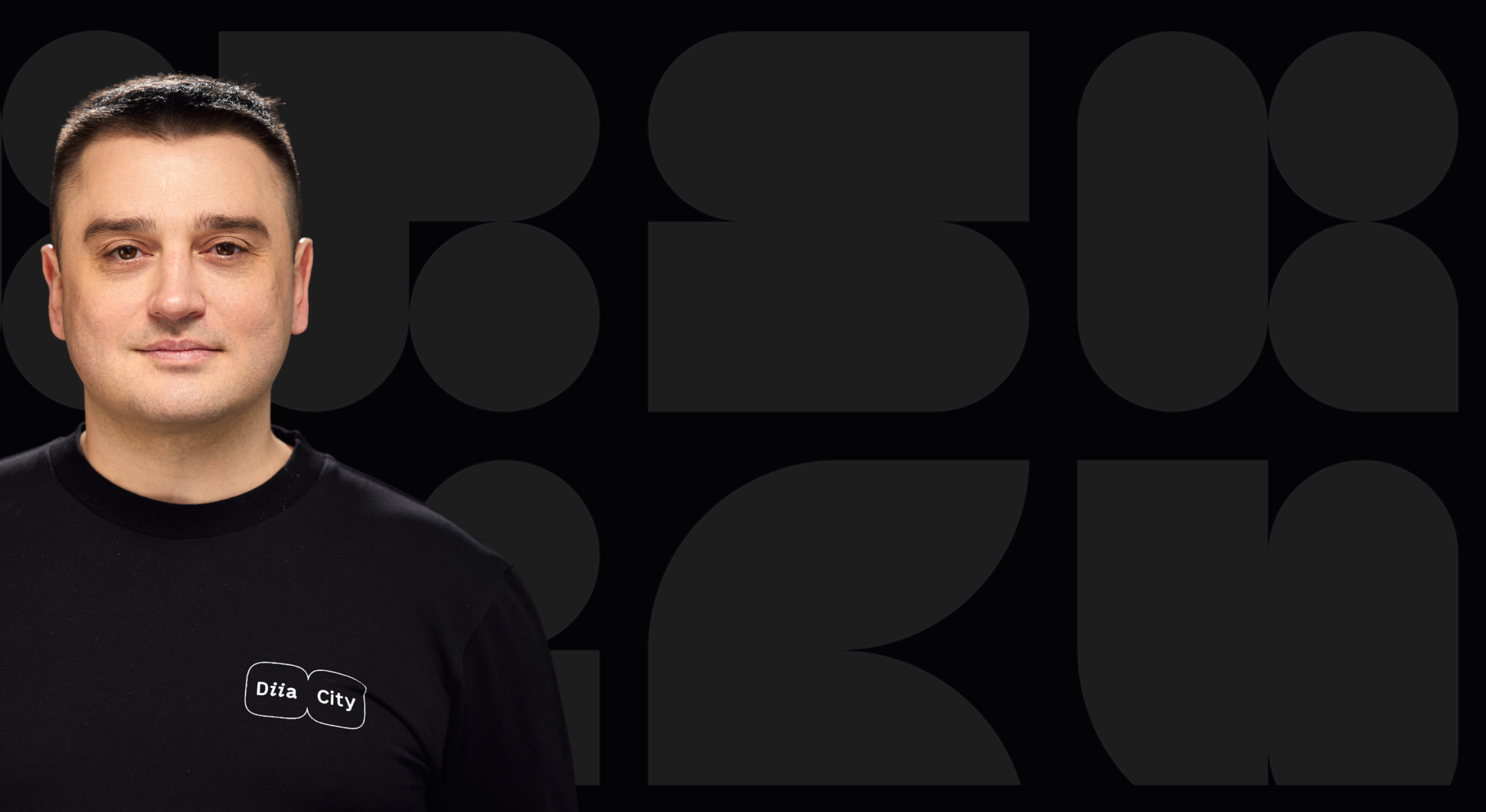
Article by Oleksandr Bornyakov – Acting Minister of Digital Transformation of Ukraine
How would you describe the key role of the Ministry of Digital Transformation of Ukraine in forming the AI ecosystem of Ukraine today? What areas of work are the most priority?
The Ministry of Digital Transformation of Ukraine plays a role in shaping the AI ecosystem as the architect of national technological sovereignty. We do not only observe global trends, but also create conditions under which Ukraine becomes a subject of the global AI market, having its own infrastructure, data and expertise.
Ukraine is currently transitioning from a Digital State to an Agentic State (where government systems act as proactive AI assistants for citizens). To realise this goal, the Ministry of Digital Transformation of Ukraine launched the WINWIN AI Center of Excellence. This center is the first in Europe to comprehensively integrate AI into the state and develop AI solutions. These solutions bring us closer to the ambitious mission — to enter the top 3 countries in terms of the level of AI development and implementation by 2030.
The center has already launched three national projects, announced partnerships with world AI leaders and started developing 18 state AI products, eight of which are already used by Ukrainians and the state.
Today, we are focusing on four strategic areas. The first is dedicated to creating our own hardware — the AI Factory infrastructure. It is highly important for national security: we are building sovereign computing power based on NVIDIA to train models and store critical data within the country, without dependence on foreign cloud solutions.
The second priority is the development of a national language model (LLM) based on Google’s Gemma architecture. This is the foundation of our identity in the digital space. The model, trained on Ukrainian registries, archives, scientific articles and media, will understand our cultural context and be free from Russian narratives. The model will be available to state institutions, businesses, defense structures, science and education. Thus, our own LLM will make it possible to scale AI in the country and use it on a large scale. As a result, the economy and well-being of Ukrainians will improve, the country’s defense capabilities will be strengthened and the state’s digital development will leap forward.
The third is the Strategy for the Development of AI by 2030. This is a practical plan on how to use AI to improve public administration, education, defense, medicine and other areas of life in Ukraine. It defines how to practically use AI for solving problems of citizens and the state and attract international innovations to build our own AI models in Ukraine. Also, it defines how to build infrastructure, prepare state data for use by artificial intelligence and increase the number of AI specialists. The AI strategy will help build a clear, concise path toward our mission to become one of the top three world leaders in the level of development and implementation of AI by 2030.
The fourth is the integration of AI agents into the priority areas of citizens’ lives. We have already launched Diia.AI, the world’s first national AI assistant that provides government services simply in a chat. It works on the Diia portal and has appeared in the application. Through the assistant on the Diia portal, you can order a certificate of income as the first service. In turn, in the application, the AI agent will provide an extract of the place of residence of a child or adult and notify about received traffic fines, which can be paid via chat with AI. Diia.AI has already been used by more than 450 thousand citizens.
At the same time, the Ministry of Digital Transformation is working on regulating artificial intelligence. We do not apply all the rules at once, prioritizing a transition period. We have chosen a bottom-up approach: first, we prepare companies for future requirements and only then we adopt legislation. This approach became the basis of the “White Paper” on regulating AI in Ukraine, published in June 2024. This allows businesses to integrate innovations with respect to human rights.
We also launched SandBox. One of our goals is to develop the startup ecosystem so that more AI solutions appear. In fact, they are changing all areas, including medicine, science, education and defense.
The Ministry of Digital Transformation has published 10 recommendations that explain how to work with artificial intelligence effectively and at the same time safely: about AI systems, advertising and marketing, media, developers, higher education institutions, civil servants, human resources management and lawyers.
We already have the first results: 14 top companies have formed the first self-regulatory organization in Ukraine for the ethical use of AI. Among them are the following market leaders: Grammarly, MacPaw, LetsData, DroneUA, WINSTARS.AI, Gametree.me, YouScan.io, EVE.calls, Valtech, LUN, Yieldy, SoftServe, Uklon, Preply.
On May 15, 2025, Ukraine signed the world’s first international agreement in the field of AI – the Council of Europe Framework Convention on Artificial Intelligence, Human Rights, Democracy and the Rule of Law.
During 2026, the development of the relevant law will be finalised – the second stage of the implementation of the White Paper on the regulatory regulation of AI, in accordance with the approved roadmap.
What is the current stage of the AI development roadmap? What are the main plans and priorities of the ministry for the next 3–5 years?
A long time ago, we moved from writing theoretical documents to real, large-scale implementation. Our roadmap is a practical plan for integrating AI into public administration, defense, medicine, or education.
Look at the foundation we have: Ukraine is in the top 5 globally in terms of digital service levels and in the Government AI Readiness Index, we jumped 13 steps at once. We have over 24 million users who are culturally and mentally ready for AI transformation. We have implemented AI tools in Mriya and on the Diia.Business portal. And in our Sandbox, companies are already testing their AI and blockchain solutions without risking a state fine.
Our ambition is very clear for the upcoming 3–5 years: to become one of the top three global leaders in AI development by 2030. How will we do this? Through four main vectors.
The first direction is building a “Smart AI-Sovereignty”. We cannot risk data; vice versa, we must clearly distinguish between what can be in the public cloud and what should remain exclusively within the country. That is why, together with Kyivstar, we are developing a large-scale national language model, Syaivo, that will deeply understand the Ukrainian context. And as part of an initiative with NVIDIA, we are launching AI Factory, our own state-level computing infrastructure.
The second direction is scaling the Agentic State. The state must cease to be just a portal of services. It must become a proactive assistant. Soon, we will give our AI a voice: thanks to a partnership with ElevenLabs, voice functionality will appear in state services.
The third priority is DefenseTech and technological self-sufficiency.
The fourth direction is dedicated to our synchronization with the EU and Big Tech. Our goal is full synchronization with the European AI Act. But we do not want to simply copy other people’s norms. We aim to influence international legislation through our real-world cases (proofs of concept). We want to show the world how to create rules that guarantee data security without killing innovation.
Ukraine today is an ideal global testing ground for AI, where cool projects can be quickly scaled to millions of people. But at the same time, our unchanging priority is human-centered AI. Artificial intelligence should not replace people, but strengthen them. This is the only way to make our economy sustainable, especially now, when we are facing a serious personnel shortage.
What is the Ministry’s role in creating a regulatory framework for AI? How can it stimulate innovation while forming a foundation for harmonization with European standards?
Our main role as the Ministry is to be the architect of these changes. We are creating the most progressive AI legislation in the world so that the state does not inhibit innovation but leads by example.
To stimulate innovation rather than stifle it with regulations at the outset, we launched the Sandbox. This is a special space for the safe testing of innovations in AI and Blockchain, without the risk of fines, with state support. So far, 15 companies have already joined the project, piloting their developments. In addition, we are actively implementing the WINWIN Strategy, which creates the most favorable conditions for startups, investors and international partners. We give developers a fast track — a quick path from idea to implementation.
At the same time, we are laying the groundwork for European integration.
The biggest challenge here is harmonization with the GDPR regulation in the field of personal data protection. For us, this is a condition for absolute trust from the EU. But we cannot risk data, so our approach is “smart AI sovereignty”, where we clearly distinguish between open data and information that requires total protection.
But there is one fundamental point for us. In the process of digital European integration, Ukraine is not just a student blindly copying others’ norms. But an active architect of Europe’s future single digital space. We aim to influence international legislation, particularly the European AI Act, through our own real-world cases (proofs of concept). We want to show the world, in practice, how to structure rules that guarantee data security while not killing the bold AI transformation.
What approaches to international cooperation do you use to unify legislation and establish the principles of responsible AI?
Our main approach is active partnership and leadership through cases. We do not wait for the world to invent rules to simply implement them. Ukraine is a global trendsetter today and our experience enables us to be co-authors of international standards.
We actively participate in the formation of international legislation. In particular, Ukraine has signed the Council of Europe Framework Convention on Artificial Intelligence and Human Rights, Democracy and the Rule of Law. This confirms our movement within a single legal field with the democratic world.
One of the key elements of our strategy is implementing the HUDERIA (Human Rights, Democracy and the Rule of Law Impact Assessment) methodology. This is a tool for assessing the impact of AI systems on human rights, democracy and the rule of law. We do not just support international initiatives but also adapt HUDERIA to our needs to ensure a balance between innovation, development and citizen safety.
At the same time, we are building a direct dialogue with BigTech. Thanks to our negotiations, OpenAI and PayPal officially entered the market in Ukraine and we launched joint projects with Microsoft, NVIDIA, ElevenLabs and Palantir. We also offer global giants, such as Ukraine, the world’s largest real-world platform for testing technologies. This helps to unify approaches with market leaders even at the product development stage.
Tell us more about the AI Sandbox concept. What real business challenges does the project help solve and can it help the state better understand business needs?
The Ukrainian Sandbox works not only with AI solutions but also with blockchain-based products. That is why it is called the Sandbox for AI and Blockchain Solutions. The Sandbox is a joint project of the Ministry of Digital Transformation of Ukraine and the Ukrainian Startup Fund. In essence, it is a platform where companies can test their solutions, receive expert advice and recommendations to improve their products and verify their compliance with national and international legislation, such as the AI Act or GDPR. For the state, the Sandbox is no less important a tool. It allows you to work not with abstract “artificial intelligence”, but with specific products and cases. The state is starting to better see how technological products actually work, what risks they face and how they affect users. Using this experience, we can create a clear and effective legal framework for the development of these technologies.
For businesses, this solves practical problems. First, it reduces the risk of errors: the company understands in advance where its product may create technical, ethical, or legal problems. Second, it saves time and resources – instead of correcting the consequences after launch, the team receives structured feedback and can refine the product at an early stage. Third, it is about trust: passing the Sandbox and applying approaches such as product assessment using the HUDERIA methodology, which allows you to assess whether an AI product does not violate fundamental human rights, demonstrating to both partners and investors, as well as government institutions, that the solution is responsible and ready to operate in complex environments, in particular in govtech.
What are the main challenges (technical or legislative) that you see in implementing AI at the state level?
When it comes to implementing artificial intelligence at the state level, we can distinguish two fundamental challenges such as technical and legislative. And we work systematically with both.
Let’s start with the technical one. Any artificial intelligence is only as effective as the quality of the data on which it is trained and operates. Historically, Ukraine has had about 350 different state registers. And we frankly tell international partners: the quality of data in some of them still needs significant improvement, because some bodies have been keeping records in almost Excel spreadsheets for years. Artificial intelligence will not be able to work with such chaos. That is why we are currently actively modernizing our backend. Without putting the registers in order, no AI will work correctly.
The second technical barrier in this area is security and sovereignty. As a state, we simply do not have the right to send citizens’ sensitive data for processing to foreign commercial companies’ servers. The solution for us is to create our own state infrastructure. That is why, in a joint initiative with NVIDIA, we are creating AI Factory and working on the national large language model Syaivo. This will allow us to process data sets absolutely safely and exclusively within the country.
As for the second major challenge — legislative — we have to strike a very delicate balance between rules and innovation. Ukraine is moving towards the European Union and we have to implement European digital legislation: GDPR, DSA, DMA and AI Act. But our main challenge is to do this without suffocating our startups with excessive regulation and bureaucracy at the industry’s stage of emergence.
Therefore, we have chosen a “bottom-up” approach. Instead of imposing strict bans, we first give businesses the tools to self-regulate. To do this, we have developed an AI White Paper, are issuing guidelines and are creating regulatory “sandboxes” where developers can safely test their solutions. We are giving the market time to prepare and adapt and only then will we move on to strict legislative regulation. This allows us to both move towards the EU and maintain our own pace of technology development.
Does the state plan to create special conditions (on the basis of Diia.City or separately) specifically for R&D centers in the field of artificial intelligence?
We do not plan to create a separate or additional tax or legal regime exclusively for artificial intelligence – Diia.City is already ideally suited for this.
Artificial intelligence development, machine learning and R&D are the basic areas that already allow companies to become residents of Diia.City and receive some of the best conditions for scaling in all of Europe. Today, the space unites over 4,200 residents, among whom more than 200 companies work in R&D and over 200 more in AI. That is, Diia.City already organically meets the needs of technology companies that work with the most modern developments and innovations.
In parallel with preferential conditions, we are creating a real physical infrastructure for R&D centers.
For example, the Brave1 cluster was created for defense tech startups. This is direct access to military expertise and real test sites. RoboLab was launched for hardware and robotics developers. The goal of this project is to create a network of robotics laboratories based on Ukrainian universities so that students can turn ideas into viable prototypes while still studying.
We opened a pilot laboratory based on the Kyiv National University of Civil Engineering and Architecture. And now, together with the Innovation Development Fund, we are developing a resolution to provide grant support to HEIs. We want to enable 10 universities to receive grants to create their own RoboLabs by the end of this year. This will allow us to systematically and quickly develop the engineering solutions the country needs.
For developers of artificial intelligence, the most important thing right now is access to computing power. That is why we are working on the AI Factory project. We want Ukrainian R&D centers to have supercomputers to train their models locally.
That is, our strategy is very practical: the best legal and tax conditions have already been created in Diia.City and our task now is to provide developers with “hardware”, “testing grounds” for testing technologies and investment bridges that we are building with international partners.
Author:
Oleksandr Bornyakov
Acting Minister of Digital Transformation of Ukraine
AI Horizon Conference
The AI Horizon Conference returns to Lisbon, once again bringing together entrepreneurs, investors and industry leaders to discuss the future of AI.